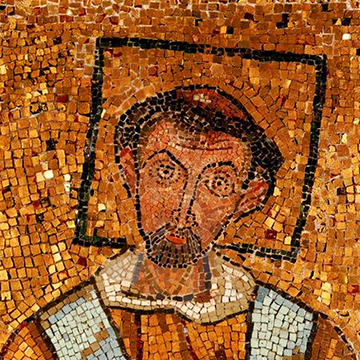
I am the way, and the truth and the life. No one comes to the Father except through me. This famous saying is sometimes used to discriminate between Christians and non-Christians. However, discrimination which judges people as less than oneself is inconsistent with what Jesus says and is. Jesus is part of the indwelling and inter-relational Trinity. God’s will is for sharing love, not breaking up and keeping it only for some groups. The Trinity’s love for other is the foundation of life itself. Jesus says, I am—the words from Exodus 3.14 where God declares himself to be God: I am who I am. That is, God is life (the verb ’am’ represents a statement that the speaker is alive), so the statement claims God is being, or is life itself.
So Christ here asserts he is life itself. I am the way (of life). Look at how I, God in human flesh have lived, spoken and acted and you can see how life is supposed to be. So, Jesus is calling us, not just to sign up to a Christian club and think we are saved, but to live our lives according to how he lived.
And living with Christ is the Truth. Not because we are right and non-Christians are wrong– that is not the Truth, that is putting human reason and judgment ahead of God. Rather, the truth that God wants is an existential truth—that means it is a truth about life itself, a rightness that brings us as individuals into a peace and harmony with how we are living. So, for instance, if we are hurting from an insult or attack, we can feel anything between anger, desire to hurt the other to feeling a victim and worthless. All these responses are human and normal—but they diminish the quality of life, and they certainly break down our healthy relationships with one another and with ourselves. When we are out of tune with ourselves and others, we are out of tune with life, and so we are not in the ’truth’ of God.
The way to God is the way Jesus has shown us– putting aside our wills for the will of God. And that means, not getting others to conform to what we think and do, but being open to changing ourselves to see God more clearly. The scribes and the Pharisees were convinced they were right and held the truth – and so they punished anyone who disagreed with them. Jesus came up against lots of people who didn’t see his point of view, didn’t hear the voice of the Good Shepherd. Although he did teach and try to show them another way, they did not listen.
And often people will not listen. To force them is to go against grace: there is no violence in grace. The Good Shepherd calls, he doesn’t beat the sheep.
Humans like to think that their own group is special and right, and use violence and judgment to those outside the group– and we see that in cliques in school groups who marginalise and denigrate others, to cliques in the office, workplace and in church communities, as well as in national racism and genocidal violence.
Jesus’ truth is not a human viewpoint which separates people from one another. Rather it brings a greater knowledge of the love of God as we see him in others who are different from us. Bikies are, by some, marginalised but the fruit of the Spirit can flow through them as they do their annual ride to raise money for sick children. Humans look at clothes, and not always at the heart. And God judges the intentions of the hearts, not the clothes.
In our life we tend to see black and white: people are ‘good’ or ‘bad’. But goodness and badness can coexist. When we see only the badness, then we fail to follow Christ because we cannot see any way forward outside the badness.
How do you see life? As a rocky path with one challenge after another to surmount, with one more difficult person to sort out before you can feel at peace? I think for many of us we do tend to see life in this way. And it is difficult because, no matter how many hills we climb, however may stones we clamber over, there is always another one up ahead.

What does Christ say about this sense of life as desolation ad struggle? He says, I and the Father are One (John 10.30). And the Father, of course, is the current of living water, of new life, of love flowing through the universe to refresh our sight and our spirits.
What if we saw our life, not only as a rocky path, but as that rocky path covered by a flowing stream, and we are floating on that stream?

Thus, we are no longer clambering over rocks, hanging on to rocks until they move or change, but flowing around those rocks because, like Jesus, we are carried in the love of God and our role in life is not to change the rocks so much as to change our hearts to become more like Christ.
And when we do that, we can find, as Hildegard of Bingen said, that our spirits feel like a feather on the breath of God!
This week, in the reality of our lives in the here can we ask ourselves whether we are walking the way and the truth of Christ or are we following another path that is only a series of stones?
Am I upset with another person? Am I clinging on to a rock of resentment until the other person changes? How is God calling me to live with Christ’s truth and to see a way forward that is of harmony? Do I think others should just think like me, or can I be open to seeing new ways of thinking as I accept others? Can I let the other just be, so I can be more with God?