Easter 7 - Humanity’s Divine Dignity
In today’s Gospel we have the privilege of hearing what Jesus says to the Father when he prays, and it is good news! He is praying for you. He is praying that you will know the true glory of the presence of God in you. He wants you to be united with the presence of God now and always. That is the will of the Father and that is Jesus’ will.
People often ask me what God’s will is for them: should they take this job or that job, get married or not, move here or there? All necessary things to think about and plan, but God’s will is actually really simple: he wants us to be one with him in his Spirit. And we can do that no matter what road we take in life, which job we take up.
If we take that perspective, we can relax a little because many people are frightened they will make the wrong decision and blow their chances at life. But if we realise that God is with us wherever we are, and that God calls us to be closer to him wherever we are, then we realise that life and salvation is not up to our human judgement and the need to make a ‘perfect’ decision. Certainly, we do need to use our reasoning and think carefully about a decision but we also need to see that our first priority is walking with God in whatever is happening around us.
Sin (selfishness, fear, violence, breaking relationships) separates us from God. And on our own we can do little to overcome the fear and resentment that builds up in us. But God not only calls us to him but gives us the means to get to him, through the power of Christ and the Holy Spirit. On the Cross, Jesus meets Sin and although the body dies, he rises in the power of the Spirit of life-giving love.
Thursday was the feast of the Ascension, when Jesus reveals what God really thinks of humans– he doesn’t despise us but wants us with him forever. Jesus ascends in his physical body and so takes humanity to heaven. This is a mind-blowing concept– we are no longer separate from God but we have what I call a divine dignity.
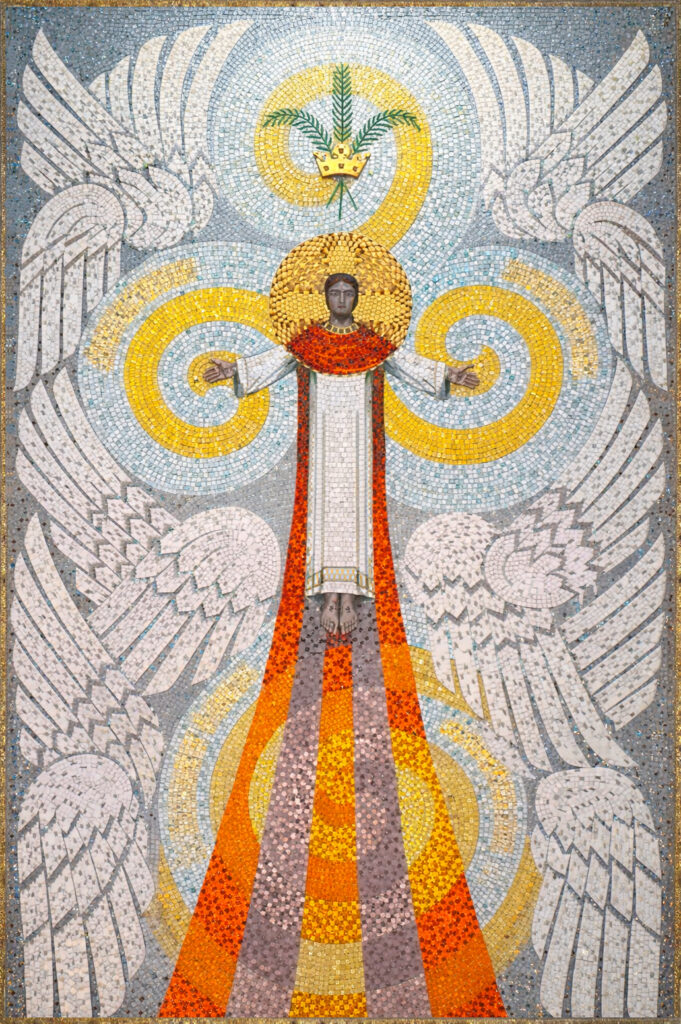
The disciples at first think the human kingdom of Israel’s sovereignty is about to come when Jesus ascends. They are still thinking in earthly ways. But Jesus’ ascension shows them that they are not just of earth and the world, they have a divine dignity and a divine inheritance. So instead of separating and fleeing, they join together in prayer with the women and Mary, and so the Holy Spirit can come and so they can work in the power of God and not only in their own human power.
How do we live the glory of God and become more aware of his divine dignity in us and in others? Peter says: exercise humility and love to others. Parents, leaders, bosses, youth leaders, anyone who is in a position of power over another (and that includes us all, children over younger or more frail children, customers over shop assistants, clients who can sue, service providers who can deny help….) All “must clothe themselves with humility in dealings with one another”.
We must try to see the divine dignity in the other person with whom we are dealing. That is what Jesus did and he glorified the Father. When we do that then we, too, see God in his love for the other person, and as God works in us, he makes us more than we would otherwise be. We can reach out in a power that is not of us. When we work with God, we see his presence and his kingdom; but when we act and speak only in our self-focused ways, we cannot see his kingdom at all.
This Week: In the challenges of life it is helpful to remind ourselves whether we are acting with the divine dignity– or are we seeing divine dignity in others? Jesus’ divine dignity could not be crushed by torture or death, although his mortal body could not endure. How do you express your divine dignity?