We are brought up to believe that good people will flourish and bad people will be punished, and that is right and fair. So today’s Gospel confronts us with something odd: Jesus seems to say that we should let the bad have free reign. And the first reading about that sly man Jacob is confusing. Jacob is a rotter who has cheated his brother out of his inheritance and tricked his own father out of his brother’s blessing! Not a nice man, and here God is telling him he is going to bless him richly!
And a fairly common response would seem to be – he doesn’t deserve that! Goodness should only come to those who are personally good and have earned it. Except, God seems to think otherwise, which is why his thoughts are far above our thoughts (Isaiah 55.8-9). He sends his rain on the good and the bad.
Does that mean that God is not fussed about evil in the world, about the innocent suffering of those bombed to death or about the life time of pain and misery caused by traffickers, individuals and governments?
No, God is a God of mercy and compassion for the poor and the marginalised. His plan is for the redemption of all suffering and the creation of a new heaven and earth where the chaos of this present life will no longer afflict his beloved humans.
His plan is long term, and it is for all. Our understanding of life’s plan tends to be individualistic and very short term. We can read Jacob’s story as a blessing for him, but what Scripture actually says is that it is a blessing for him, but also for generations of others who have gone before and who will succeed him.
I am the God of Abraham and your forefathers, and your descendants will be like the dust of the earth, and you will spread out to the west and to the east, to the north and to the south. All peoples on earth will be blessed through you and your offspring…. I will not leave you until I have done what I have promised you…
Jacob is just one little piece in a very complex web of human lives over which God is Shepherd and Lover. His plan is to restore Eden, and one day all the chaos and darkness will be gone- but before this there is still darkness, and we are not always able to see the Truth, or to truly discern who is good and who is wrong. But the flawed Jacob is still able to work in part with God for this new world.
And that is the background to today’s Gospel.
God the master has liberally sown good seed everywhere. But the forces of chaos are at work, and in the darkness, seeds are fostered that can choke out the wheat. The attentive servants rush to tell the master that they will go and uproot the weeds. Surely that is responsible and right and good? But the master says ‘no’. Let the two remain until the end of time, and then God and the angels will sort out the wheat from the weeds.
It is important to note the context of this: the end times. We want an instant settlement of our wrongs now. Sometimes that can happen, but if it can’t now, then all will be redeemed in the next life.
God is quite clear that in his new heaven and earth there is no place for evil. But here, in this troublesome life, there is evil and chaos. And the problem is we think we always know the difference. And that is the trouble. We see and judge the world through our subjective attitudes where we are right and the others are wrong.
There is a horrible history of church leaders burning people at the stake for heresy. More recently, children were not believed and were told they were wicked for trying to name abuse. And, of course it is not just church people, but governments and corporate leaders who persecute whistleblowers and then, of course, there is ourselves.
Isn’t it easy to join in on a group gossip about that dreadful new person in our street, congregation or office? There is something rather satisfying about two or three gathered together to attack a third person because that person is clearly wrong and deserves it! Sometimes we are simply attacking the idiocies of people we don’t even know.
I remember the outrage about the stupidity of courts and lawyers when a woman in the USA was awarded well over a million dollars because she spilt a cup of coffee on herself. How absurd was the litigation system! But actually, the facts later emerged that the café franchise had twice been formally warned by the health authorities to lower the temperature of their coffee, which was scalding hot. The woman spilt the coffee which was boiling and she had such severe burns to the lower half of her body that she was off work for a year and had to have multiple skin grafts to legs and pelvic area. This was not a trivial court case: there was negligence, pain, suffering and the judge awarded accordingly.
What we see as right and wrong is not always based on the facts. In life, we rarely know the truth of the circumstances of people’s lives, or the complexities involved in other people’s jobs. Jesus is not saying here just let people abuse one another. There is godly discernment: is this action building the kingdom or not? But there is also judgment and condemnation of others to prop up our own ego and make us feel more righteous.
Jesus warns us to be careful about judging others. In this complex life, we need to frame our response to current challenges in the context of the end times. We cannot control what others do but we can generally manage our response to the circumstances in which we find ourselves. And so we are asked to respond in the way of the Spirit, of bringing life to ourselves but also to others.
Is what we are doing, thinking, saying building up peace, grace, and the new kingdom. Or are we working with the forces of chaos to sow more seeds of resentment, self-righteousness and hate?
This may seem hard, but God himself is active in our attempts to work with his will in this life. He has made us in his image to reflect him, and so he calls to our spirit, which recognizes goodness and grace. He calls us to him so that we can draw on his greater power for light in the darkness. If we are praying daily to hear this call to grace and peace, he will reach across the space between heaven and earth and connect us to him.
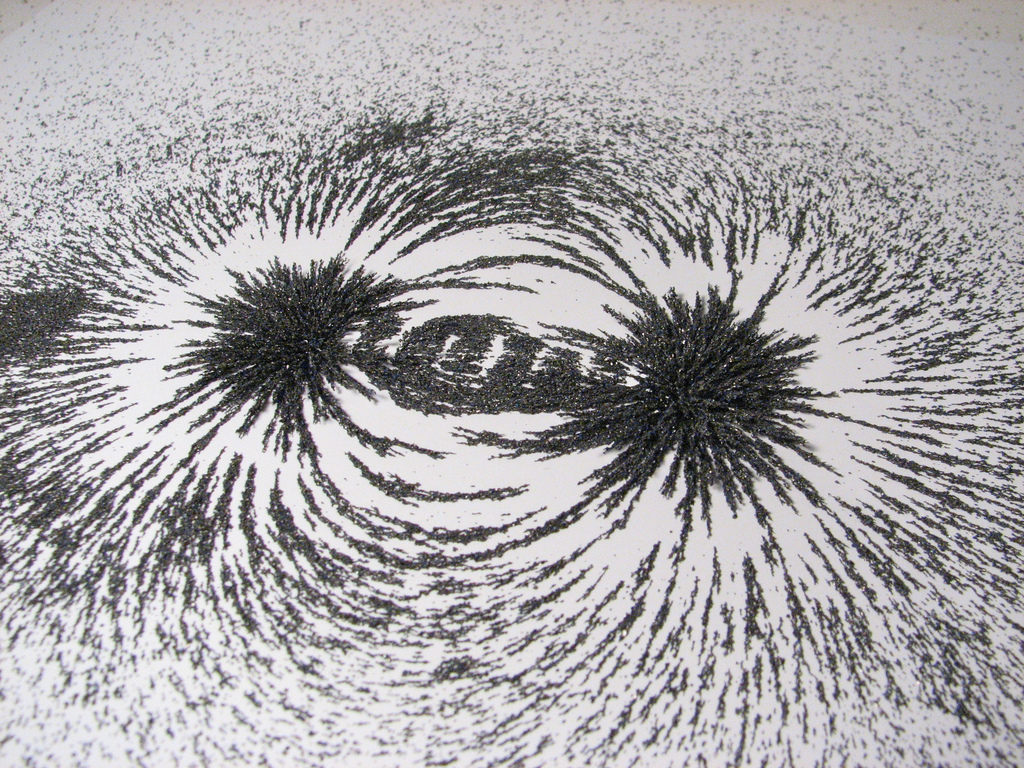
Have you ever seen a magnet placed under a piece of cardboard, on which are a whole heap of fine metal fragments? When the magnet is moved, the files are drawn into the most amazing and beautiful patterns. On their own, they are simply little grey flecks of metal, but drawn and held together by the power of the magnet, they are built into fantastic, beautiful and harmonious patterns.
We are each a little metal filing but, in the power of the Word of Life, we are drawn into the beauty of the Body of Christ. The shape of this Body changes through the eons of time as more people are added to it, but the consistency of the shape remains: it is made entirely of those fruit of the Spirit, acts of goodness, compassion, forgiveness, self-control and perseverance.
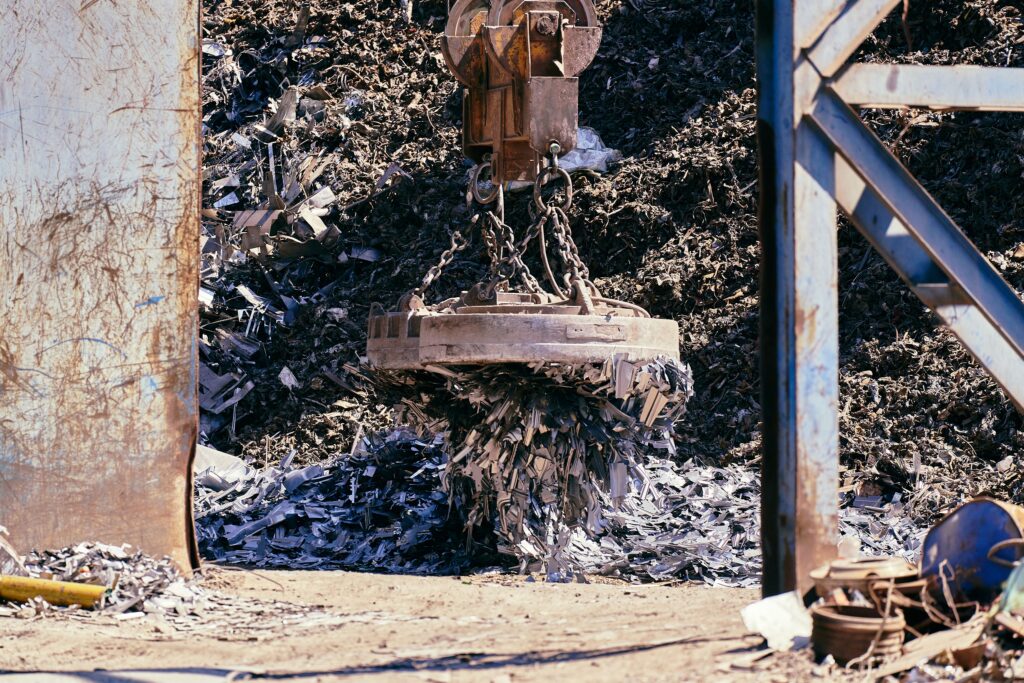
We cannot make life, but we can let ourselves be drawn into the glorious flow, harmony and power of God’s Spirit, when we take our focus off ourselves, what we think is right, and let love and compassion guide us into acting for the building of God’s kingdom, and not our own.
May your week be truly blessed. Amen.