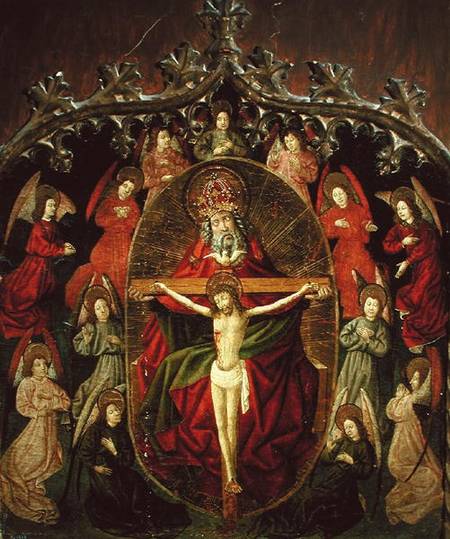
What does the Trinity mean for me? It is such a bizarre idea: three persons who are one person. It makes no sense and so much academic space has been spent on trying to describe it that a Christian could easily feel very confused about the whole thing. And not bother with discussing the Trinity at all.
But that would be to miss the whole point of the relevance of Christianity to everyday life. It is not something that makes ‘sense’ but it is simpler to understand if we talk about the persons, not only as individuals, but individuals in relationship. And that relationship is one that is mutually beneficial for all three. In fact, they all flourish in this Spirit of love. There is total harmony between them, as each cares for the flourishing well-being of the other, and knows itself totally loved. Imagine what it feels like at the heart of the Trinity: utter peace, but also incredible dynamic energy.
Christianity sees God not as a distant spirit, unchanging, removed, perfect and separate from us. Rather, it understands that Father, Son and Holy Spirit share in a dynamic dance of love that is far beyond human experience of love– and so powerful that it creates life, and renews damaged life.
And this life that pours out through the Trinity arises through relationship. Imagine what the world would be like if everyone actually imitated the trinity? If everyone put as much effort into honouring, loving, and wanting the well being of the other as the Trinity do?
Well, we would have heaven wouldn’t we? Or, at least, something of the new heaven and the new earth that God promises at the end of time.
We can see what causes the collapse and destruction in the real world is the simple fact that governments are choosing to kill vast numbers of others simply to prop up themselves. Greed corrupts business and politics. It is the desire to put oneself first, and totally ignore the needs of others that is making this world so unstable and unhealthy.
What if there was some old-fashioned diplomacy that worked on a win-win basis, rather than exploiting others for one’s own wealth? What if social systems were there to provide equal access to goods and service for everyone, not just for the rich. Imagine if no one felt unequal or deprived, how free we would be from crime and anger in the community? Imagine how meetings would go if everyone at the table was actually thinking of the well being of others, not just of their own agenda.
And such a world is possible if we actually did what we are created for. We are made in the image of God to reflect God, and God is about relationships of compassionate love.
That is why the Trintiy is so essential to our Christian faith, it is actually the means of sustainable and healthy community. So why don’t we follow the Trinity?
Because although God freely tries to distribute his presence to us through his gifts of the Spirit, we choose to follow our own will and not that of God.
That is why Jesus came – because the Trinity recognised that humanity couldn’t actually overcome selfishness and greed by itself, it needed the extra divine presence to strengthen us. That is why we have just celebrated Pentecost – Jesus breathes his own self, his presence, into the disciples.
But they have been seeking him and asking for this presence. We cannot outsource our part in building a healthy Trinitarian community by just leaving everything to God. He wants us to join with him so that we can really experience his blessings.
Again, the Trinity shows us how to be part of the Trinity. Jesus takes on human flesh, Jesus experiences everything we do in life – all the joys, and all the fears, and hate and injustice- but he responds differently to these life events and relationships than we do.
Jesus responds with the love and compassionate mercy of the Trinity and, in doing that, in binding his human self totally into the will of the Father, he brings this flawed humanity through the gates of death to new life and, in his bodily Ascension, to eternal life.
But he has had to undergo the sacrifice of his human will – all the natural impulses to resentment, hurt, anger, disappointment. He does experience these emotions and they are real. But there is something more and greater and that is the compassionate love of God that wills the good of all people.
And Jesus will go through anything to help bring about that end: the well-being of all.
So he goes to the Cross in self-sacrificing love of the Father’s will, refusing to condemn and judge people himself, and handing those who hurt him over to the justice and mercy of God. He will let The Father’s will for these people take precedence over his personal hurting human will for these people.
And that is a true freedom. The Trinity is about the dance of compassionate love through space and time, the dance that wants to bring all creation into its embrace. But we do have to follow this dance. We have a choice. What is this love that the Trinity shares: not human emotional love, but that active love that Paul describes which will build sustainable healthy relationships and community.
This week: where am I having difficulties in relationships with others? How can I ask the Trinity to come in and help me love in this new way? When I despair at the state of the world, can I pray God’s healing, compassionate love over the troubled places so that I, at least, am one with the Trinity? Because that is often all we can do, and all that God calls us to do.