Pentecost: Birthday party or deeper theological point?
Pentecost is often described as the birthday of the Church, but this can be too simply translated into simply singing happy birthday, having cake and celebrating what has gone on over the years in a particular church. Now, there is nothing wrong with any of that. But that can bring a focus very much on us, and what we do, rather than the startling theological point of Pentecost: God chooses to give his very presence into human beings.
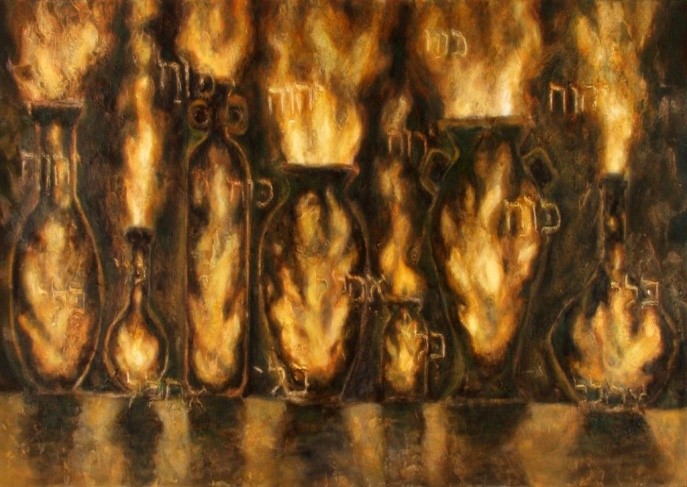
And the Spirit comes not just to special people, but to everyone in the room. On Mt Sinai, wreathed in fire and smoke, God came only to Moses, who thereafter glowed with the divine glory. But at Pentecost, the fire of the Spirit comes to each disciple. The old covenants of God were sometimes with an individual but this sign of the New Covenant of Christ sinks deep into the very heart of each person.
If this is the Spirit that filled each person, then this is God Himself who is filing the humans. Jesus Christ was the God-Human, and now he imparts the Spirit so that we too can live and reflect the glory of God. And none of this ‘gift’ is earned by any of the individuals nor is it measured out according to the piety of the individual. The gathered disciples are just flawed, scared men and women wondering what the heck is going to happen.
It is not their courage that makes the difference, it is the Spirit. What difference does this Spirit make? It transforms character from the inside, it opens eyes and ears to see and hear the presence of God in creation and in humans. The initial act of the disciples was to be able to speak in languages the recipient could understand (this wasn’t glossolalia-what is often called talking in tongues). Rather, the Greeks heard Greek, the Medes median etc.
So, the Pentecost Spirit builds a bridge between the divisions of language and ethnicity. It allows people to feel understood and heard. Have you ever been in a situation where you feel properly understood and heard, where the other hasn’t cut you off, hasn’t given unsolicited advice, or told you what to do before you could actually say what you wanted? It is great to be truly heard, to feel oneself honoured as an individual.
And that is the gift of God and how God wants us all to feel. Think about the sort of God that actually wants us to be fully heard – what dignity he desires for each person! And yet, so few people actually take up the Spirit’s gift of godly and compassionate listening to another. Instead, many tend to depersonalise others: ‘they’ are just grasping migrants ripping off our country, ‘they’ are just useless dole bludgers, ‘they’ are only greedy politicians etc etc. And, of course, we see this attitude around the world in the racism which is producing multiple massacres and genocide.
The Pentecost Spirit is desperately needed today. Depersonalisation blinds us to others, it makes ‘them’ merely a negative blob in our path, rather than us seeing them as children of God, made in his image to reflect his image. The gift of the Spirit is not miraculous powers to show up how great some people are – the presence of the Spirit is to open our eyes to see the world and others as God does.
All God made is created good. It can be deformed and can abandon God’s image, and not everyone is wonderful. We do need to keep ourselves and others safe from manipulative and abusive people. However, often we ‘see’ others as awful, an irritant or in our way because of fear of the other, or judgment of the other from our own subjective viewpoint.
Fear or selfishness which depersonalises another is original sin; it is the root cause of separation from one another and from God. Jesus, on the Cross, overcame that sin with the forgiveness of his Father. For God is the one who is truly in charge of the darkness and who alone can deal with it.
But God has created us to work with him to overcome the darkness, and this depersonalisation. We really aren’t very good at listening to others, seeing what they need, trying to support them to grow and flourish, rejoicing in their good fortune. Cain found it much easier simply to kill the brother who irritated him. Various presidents of countries are continuing to do this right now.
But what about us? How do we ‘see’ the foreigner who is different from us, the person who irritates us, the surly cashier, the driver who wouldn’t let us into the lane when we tried to merge? Do we see them as beloved children of God, created to reflect the image of God. On our own, we cannot see the truth about others, so God gives us himself, the Spirit to see more clearly. These gifts are not natural gifts (musical or athletic ability, a hospitable and friendly nature) good though these are. The Pentecost gift is the capacity to see as God does so that his community of love for all can be made.
We are the Body of Christ, but we are only the Body when we have this Pentecost spirit in us. We enter into Eucharist with the greeting of peace so that we actually declare, to one another, that we are seeing them as God does, with his love and with his desire for the fullness of life for the other.
As we exercise these spiritual gifts for the well being of others, then we grow into God, and into his Truth and so we see reality more clearly. And the world, which when I am hurting becomes a fearful and threatening place, becomes, with the Spirit, a place where my soul can flourish, no matter the circumstances.
Yes, there is evil and injustice and wrongness in the world: The risen Jesus shows he marks of the nails in his hands. Death, too, is reality. But he is also showing them something far more. The glory of eternal life, their eternal life, the life that is one with the God who loves them utterly, both now and forever.
This is the reality that is opened to the disciples and so they are freed from fear. They go out and talk to strangers about this joy, because this is God’s will, that everyone know joy and divine forgiveness and be transformed from individuals isolated from each other by fear, hate, resentment, jealousy or whatever it is that separates them.
This is what we are celebrating at Pentecost: the possibility of a new sense of community where there is dignity for all, the building up, not tearing down, of one another, the listening to one another in deep respect. And, most importantly, the praise of God who is the only one who can create this community.
But he needs us- you and me- to open our hearts and let his Spirit work through us to another person, in the church community and wherever we are. This week: can you truly listen to someone, pay attention to what is going on in their lives, what it is that worries them? You don’t have to convert them. Listening to a person in non-judgmental compassion is the presence of God. May God come to truly live in us all. Amen.