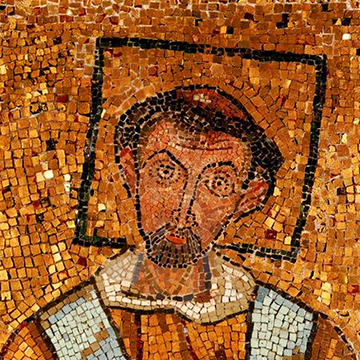

Jesus has commissioned the disciples and is sending them out– and he warns them that the life of a disciple, although glorious, is not easy. If he has found opposition: people who disparage him, fear him and want him shut up, then so will they. A disciple is not greater than a teacher, he says. That is, what I go through you will, too.
If we know that the way of truth and growth into God is to love and build communities of peace, then we will invariably come into conflict with anyone who stands for ‘me first’, rich above poor, racism, violence, abuse, or cheating. And some of these people are in our own families! Having to say ‘no’ to them is not easy. Jesus says he has come not to bring peace but a sword and to set family member against family member.
But it is not he who is causing the dissension. The dissension arises from the powers of darkness, who seek to invade the cracks and flaws of insecure people and encourage them to acts that break down, and don’t build up, community. If we try to stand with the force of light, there will be a clash with the darkness. And it can help in navigating life if we remember that there is a distinction between a person, made in the image of God to reflect God, and the acts of that person, which may be of the dark side.
In God’s light we see light, but we also recognize what is wrong, and what we have to stand against, if we are to follow God and not idols or people. As we grow closer to God, we also become more aware of our own sin, and our own will. We recognise an internal battle when we struggle with our wills that seek things other than God. Sometimes these things are clearly wrong, but sometimes we just want peace and harmony– surely not wrong?
And that is what Abraham wanted—peace at home but he was caught between a rock and a hard place. Throw out Hagar and Ishmael or keep her and have a household seething with resentment and anger! Sometimes there is no good choice, and we struggle with our weakness. We realize that some things are out of our control. And then, we struggle with our will for control and more often with a guilt because we couldn’t manoeuvre things into a better position.
The spiritual journey brings us to confront, and not ignore, moral dilemmas. It is so much easier to simply go with what culture, peer group or what family want but Christians are called to respond to the people and situations we encounter in a way that deepens our relationship to God. Thus, everything we do is an opportunity to grow deeper in love of God and others and so come to our true self.
How to be a faithful disciple in moral dilemmas is not easy because moral dilemmas ae complex and messy. One of the ways I have found useful to cut through decision making is to try discern what is life-giving for me and others in this situation.
Are my actions (or potential actions) going to lead me towards something that is life-giving or not? Which choice will help those around me to grow in godly ways? Just giving in to someone who is manipulative is not helping them grow, it is binding them into the sin and so damaging them further. That is why Christians need to say no to some people!
Sometimes, we just have to recognise that we are being self-willed, and turn back to Christ and his love, but sometimes situations are complex with no easy way forward.
And then, in that Gethsemane moment, God says, trust me. Yes, keep loving me and listening in your spirit to what I am trying to say to you. Keep walking the path of light – and then that is enough. Let go of trying to will a particular outcome, but keep firm that your actions and will are centred in me. Sometimes you cannot do any more, it is going to be a mess, but give me your heart and your will and I can then try and work in that situation, if not here and now then in your future, which is always in my time.
You are not me, says God. You cannot see, you cannot manage all life’s complexities, you are only a little sparrow in the grand universe. But I love every sparrow and not a sparrow falls that I do not see and care for.
On the Cross, Jesus could not persuade the authorities to change their minds, he could not control the resentment and anger of those around him. So, he did what God only ever asks of us. He endured what was, but kept his heart in love of God and forgiveness of others. And that was enough. And that changed the world. Can we trust to God, let go of false guilt, and try to continue to walk in his love? It is, in the end, enough, for God is enough.
In whatever dilemmas you are experiencing, may the light of Christ guide you, the comfort of the Spirit be with you, and the power of the Father’s love bless you. Amen.