Why is the world order collapsing, and why are the churches declining? The biblical response is clear – people follow, either unconsciously or consciously, their own will and desires rather than choosing to do God’s will.
This week’s readings illustrate that point. First, there is the story of the twins, Jacob and Esau and their sibling rivalry, a biblical theme continued through Genesis since the murder of Abel by Cain.
The sibling rivalry is worsened because, from the beginning, the parents each favoured one of the boys over the other. Their favouritism worsens Jacob’s sense of entitlement. Their will frustrates the establishment of fairness and justice in the family circle. Humans will tend towards selfishness unless God intervenes.
Esau, the elder, should inherit the largest portion of his father’s property. When he allows himself to be tricked by Jacob into surrendering his birthright for a bowl of hearty lentil stew, he follows his hunger and ignores the wishes of his father, and enables the sin of Jacob.
We see a foolish man and a sly selfish man. These are not paragons of virtue! Scripture doesn’t show people to imitate, but rather has stories of flawed men and women whom God continues to love and try to draw back into his covenant and relationship.
Esau and Jacob split, and it is many decades before they reconcile. But God brings them through their very different lives and blesses them both in different ways. He scatters his blessings on good and bad alike.
That is what Jesus is talking about with the seed beings cast liberally and generously. Any sensible farmer would put the seed only in the good soil. But God pours out his love, his Word, his grace on all of creation.
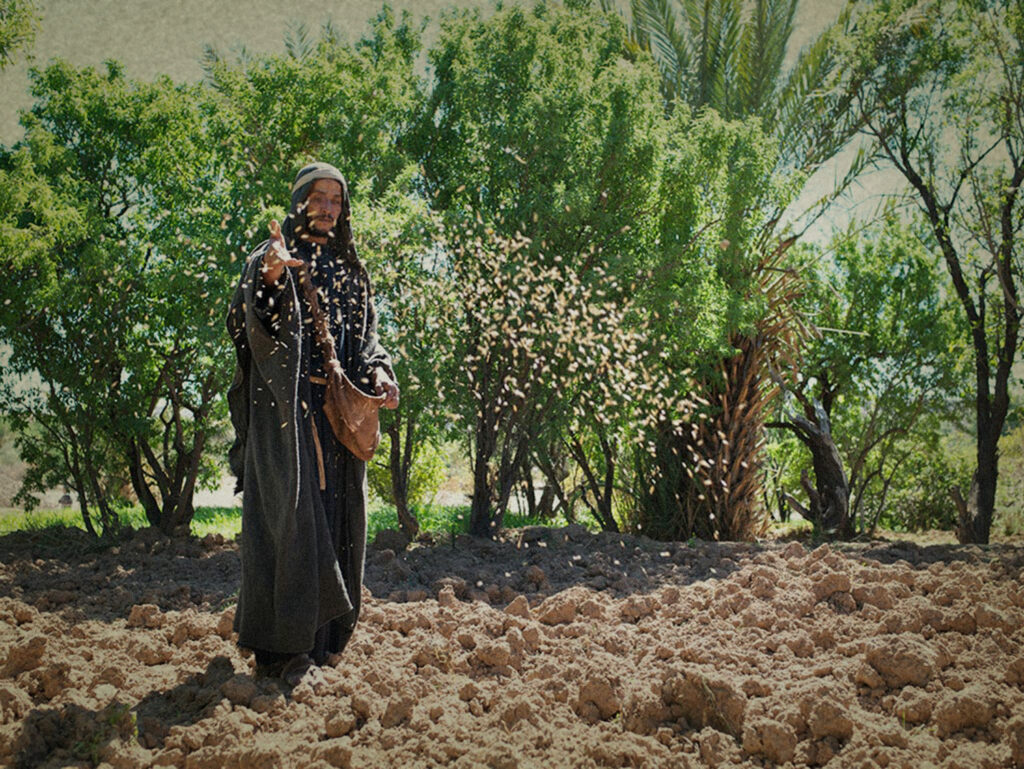
Jesus describes a God who doesn’t withhold goodness, but he also shows a world where some choose not to hear, or are unable to hear, the love of God and so cannot let his life of goodness flourish in them.
Does God blame and condemn those who, choked by worry, grief or trauma cannot see him? No, he continues to pour his love on them. That is not harsh judgment. And what cannot be brought to renewal of life here, will be redeemed in the next. Yet here, this parable shows, God is present in the pain and troubles of life.
Yet, on our own we find it very difficult to hear or see God. Paul says, ‘but we have the Spirit that raised God from the dead in us’. We can ask this spirit planted in us and consecrated by baptism, to help us through the rocky patches. The Holy Spirit is the giver of life; it activates the seed of God which then grows and brings flourishing good life to the bearer.
We note that the soil itself does not produce the fruit or plant – it cannot produce life. It needs the seed to do that. And if the seed is God’s Word, his grace, his presence, then we have an image that is about God working in a human being to produce his fruit in this world.
The good things of life come then, not from ourselves, for we are only the soil. All the blessings come from God as a gift.
That is a thought that should make us humble. We don’t achieve the goodness, the blessings, the new life by ourselves. We are indeed soil, or humus, from which the world humble comes.
And humility should enable us to be freed from the burden of perfectionism, of having to always strive harder and solve all the problems of the world. It should free us from the awful burden of feeling useless because the world and life do not go as we would like them to go.
There is much in life we cannot change. Come to me all you who are carrying burdens and I will give you rest, says Jesus.
Lay down the burden of responsibility to change other people or the situation, but do look to see what seeds of God are already there in the situation. We are God bearers, carrying the seed of God, and he has tossed other seeds of new life all around us.
And God wants us to help these seeds grow in other people as well; seeds are not just for our personal benefit.
We are given his Word, his grace, his blessings to fulfil God’s will- which is that all people come to the flourishing of their lives in him.
When we look at the church, it seems we live in barren rocky soil and that God is not present. We see only absence. But God is wanting his seed to grow. And there are so many seeking spirituality at the moment.
How can we help others nurture the seeds? Look around, who has expressed a little interest in the spiritual life? Grandchild, neighbour, acquaintance? They have a seed of God in them that needs watering and nurturing. Can you connect this person with someone to listen to the their walk with Christ, to discuss the spiritual life, to lend some appropriate material to help the person grow in love of God?
Helping other people come to know God’s love is the fertiliser to build our own rich soil.
And it is easy to see those who are unsuccessful in life as those who have the rocky soil.
But that judgmentalism dries up our soil so God’s seed cannot grow. That judgmentalism closes eyes to the reality that God’s goodness is everywhere and only waiting to be seen and encouraged for new life to come.
I think society would call prisoners rocky soil, but I have seen prisoners exercising more self- sacrificing generosity to one another than I have seen in many congregations.
Think of the good that comes from the bikies rides for charity, although they still deal in drugs.
God sends his rain on the good and the bad. If we continue to not see God at work in other situations, then we cannot really nurture the seed within us.
It is important to recognise, not just that some people may have, at the moment, rocky soil, but that our soil differs too at different stages of life. Sometimes our worldly troubles do dominate and we don’t see seeds. Sometimes there is just so much else to do.
I think that the major point of the parable is that God’s seeds of goodness are around us whether we see it or not, and whether we feel good or not. Jesus didn’t feel God’s presence on the Cross. But God was there, and he was already working on the renewing of Christ’s glorified body.
This world, with all its beauty, wonder and joy, and also with its horrors, pain and death is not all there is. It is not our final and only destination. We are being called through life to the flourishing of God’s kingdom – which is real and solid- the eternal shining city, which is built on the spiritual values that God showers into this world.
And God’s will is that everyone gets there, to this beautiful world. But not everyone can manage it by themselves. We need others to help us see that there is a seed of love, hope, new life, in the rocky patches of our lives. We need others to pray for us, guide us, have compassion for us when we feel choked and overwhelmed by whatever is happening.
And we need to be thinking of others and their journey to this kingdom. And in our own difficulties, we need to be reminded that God is, indeed, everywhere. He is raining his rain on the good and the bad times and on the good and the bad people.
Bad stuff does happen, but there is also something more from God. Something new and different but of life. You are not forgotten; you are not abandoned. You are loved and his mercy is there, liberally, abundantly, no matter what is happening.
Let us lift our heads this week and look about us. Not just at what is happening in our own little world. Where there is rockiness, thistles and hurt, pray into it for the people to flourish into truth and grace and a deeper awareness of God’s love. That will aerate and enrich your soil.
Where we can, help and support practically, and where we can do nothing, continue to pray and know that God is working. He cannot not work for he is the energy of all new life.
Let us go forth rejoicing, for there are sheaves abundantly to harvest. Amen.